
Network Latency Monitoring

Common Network Issues We Solve
At Splitpoint Solutions MIVU, we identify and resolve common network issues to ensure fast, reliable, and secure connections, keeping your business operations running smoothly.

Slow Network Speeds
Detecting and fixing bandwidth bottlenecks for faster performance.

High Latency
Monitoring delays to improve data transmission and response times.

Network Downtime
Identifying causes of outages to restore connectivity quickly.

Packet Loss
Troubleshooting lost data to maintain reliable communications.

Security Vulnerabilities
Protecting networks from unauthorized access and attacks.

Connectivity Errors
Resolving router, switch, and device connection problems efficiently.
Why Network Latency Monitoring Matters
Network latency measures how quickly data moves across your infrastructure. Even minor delays can disrupt applications and user experience. Splitpoint Solutions’ MIVU provides real-time visibility to detect and resolve latency issues before they impact operations.
User Experience Degradation
Even a 100ms delay can significantly impact user satisfaction and reduce productivity. Slow-loading applications frustrate users and lower overall system efficiency.
Application Performance Issues
High latency causes timeouts, failed transactions, and cascading issues across distributed systems and cloud environments.
SLA Violations & Penalties
Unmonitored latency spikes can lead to service-level agreement breaches, resulting in financial penalties and damaged client trust.
Invisible Performance Bottlenecks
Without proactive monitoring, latency problems remain hidden until they cause outages, system slowdowns, and business disruption.
How It Works
Get started with powerful network performance monitoring in minutes — not months. Our streamlined system delivers fast setup, instant visibility, and continuous optimization with MIVU.

Connect Your Network
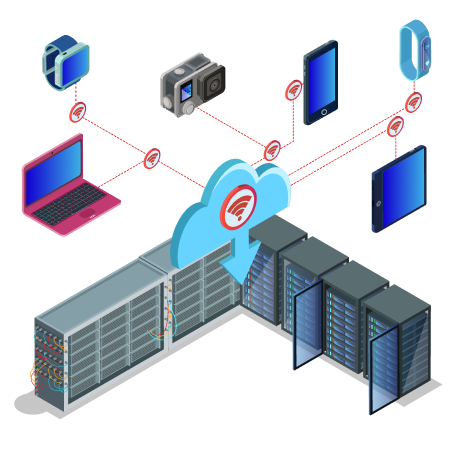
Deploy agents or connect via SNMP, APIs, and flow data. Works across on-premises, cloud, and hybrid infrastructure.

Live Latency Monitoring
Track latency across all network paths in real time with precise metrics and easy-to-read performance dashboards.

Detect Anomalies Instantly
AI-powered detection identifies performance spikes and deviations early to prevent user impact and SLA violations.

Optimize & Prevent Issues
Get actionable insights to improve performance and prevent future latency issues with predictive intelligence.
Why Choose Us
See why leading enterprises are switching to Splitpoint Solutions.
| Monitoring Capability | Splitpoint MIVU | Traditional Monitoring Tools |
|---|---|---|
| Deployment Time | Minutes | Days–Weeks |
| Visibility Across Environment | Unified Dashboard | Multiple Tools & Dashboards |
| Alert Intelligence | AI-Powered & Context-Aware | Rule-Based Alerts |
| Root Cause Analysis | Automated Insights | Manual Investigation |
| Data Collection | Lightweight Probes | Agent-Heavy Deployments |
| Monitoring Coverage | Network, Infrastructure, Applications & User Experience | Siloed Monitoring Tools |
| Scalability | Flexible & Easily Scalable | Additional Licensing & Configuration Required |
| Performance Insights | Real-Time Visibility & Analytics | Delayed or Historical Reporting |
Enterprise Security You Can Trust
We monitor your networks without ever accessing patient data. Our security-first approach ensures your organization stays compliant while gaining complete network visibility with MIVU.

HIPAA-Ready
Built with healthcare compliance in mind from day one

Encrypted Data
All data transmission secured with enterprise-grade encryption

No Patient Data Access
We monitor networks, not patient information

Audit Logging
Complete audit trails for compliance reporting
Trusted by leading companies across industries






Why teams
choose
Splitpoint
Built to give your team complete visibility and control over the systems that matter.

See everything in one place
Eliminate blind spots. Monitor network, infrastructure and applications together, instead of stitching together separate tools.

Find the root cause faster
Move from guessing to knowing. Trace an issue across the stack and fix it before it reaches your users.

Built for enterprise scale
Designed to handle high-volume environments without slowing down or losing detail.

Your data, your control
Analyse, troubleshoot and report on your own terms, with full access to the underlying data.
All Articles
Network Monitoring for Schools: Security and Uptime
Network monitoring has become essential for schools, colleges, and universities, which run on...

Network Monitoring Challenges Faced by Schools and Colleges
Running a campus network today looks nothing like it did even five years ago. Between online...

Key Types of Network Monitoring Used in the Education Industry
A district can run three monitoring tools and still not know why a state assessment stalled in the...

Top 11 Network Monitoring Tools for the Education Industry
A district network can pass every uptime check on the dashboard and still be failing. Ninth period...

Hybrid Infrastructure: The Enterprise Blueprint for Modern IT Operations
Enterprise IT no longer runs from a single location. Most organizations today operate distributed...
Top 5 Features to Look for in Data Center Network Monitoring Tools
Data center network monitoring tools are software platforms that continuously track the health,...
Frequently Asked Questions
Everything you need to know before getting started with Splitpoint Solutions.
What is network latency monitoring and how does it work?
Network latency monitoring measures the time it takes for data to travel across a network. It continuously tracks delays between devices, applications, and services. By collecting real-time metrics, it helps identify slow network paths and performance issues early.
Why is monitoring network latency important for application performance?
High latency can cause applications to respond slowly or fail to meet user expectations. Monitoring latency helps ensure consistent response times and smooth application performance. It also supports early detection of network-related slowdowns.
How does network latency monitoring help identify performance bottlenecks?
Latency monitoring highlights delays across network segments, services, and dependencies. This makes it easier to pinpoint where performance degradation occurs. Teams can quickly isolate whether issues are network, application, or infrastructure related.
How does real-time latency monitoring prevent performance issues?
Real-time monitoring provides instant visibility into rising latency levels. Alerts notify teams before thresholds are exceeded. This enables proactive fixes that prevent small issues from becoming major disruptions.
What role does network latency monitoring play in reducing downtime?
By detecting latency spikes and network failures early, monitoring helps prevent outages. Faster root-cause analysis reduces resolution time. This keeps services available and minimizes operational impact.