
Healthcare Network Monitoring
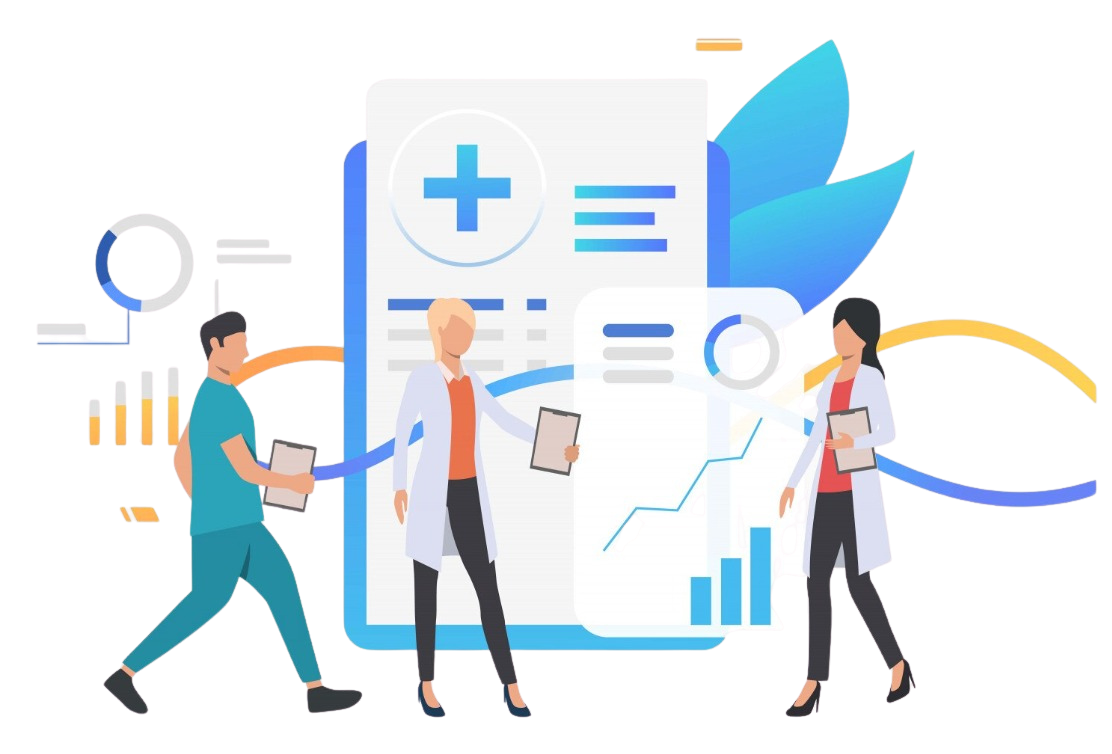
Monitoring Built for Clinical Environments
Hospital networks carry clinical systems, connected devices and patient data on the same infrastructure as everything else. MIVU gives IT teams full visibility across all of it without ever touching protected health information.

Clinical Uptime
EHR, PACS, telehealth and nurse call monitored continuously through our network infrastructure monitoring, with alerts that reach the on-call engineer before a clinician raises a ticket .

Connected Medical Devices
Infusion pumps, imaging modalities, monitors and other IoMT endpoints tracked for network behaviour and reachability — device traffic patterns, not device data.

Audit-Ready Evidence
Retained, exportable logs of network activity, configuration change and access, ready for HIPAA security-rule reviews and internal audit.

Every Site, One Dashboard
Hospitals, clinics and remote sites in a single view, so a group IT team is not opening one console per location.
What We Monitor
Complete visibility across your healthcare IT ecosystem with Splitpoint Solutions’ MIVU. Our healthcare network monitoring ensures secure, reliable performance across core infrastructure and connected clinical systems.
Network Devices & Traffic
Switches, routers, firewalls and wireless controllers via SNMP, with flow analysis (NetFlow, sFlow, IPFIX) showing which clinical application is consuming a saturated link.
Clinical Applications
EHR platforms, PACS and imaging, LIS, pharmacy systems and telehealth — measured for response time and transaction success from the wards and clinics that use them.
Connected Medical Devices (IoMT)
Discovery and traffic profiling for infusion pumps, patient monitors, imaging modalities and diagnostic equipment. Behaviour on the network, never clinical data.
Servers, Data Centres & Cloud
Physical and virtual infrastructure, storage, and AWS, Azure or Google Cloud workloads appear through unified infrastructure monitoring on one timeline with on-premises systems.
Clinical Wi-Fi & Mobility
Per-access-point coverage across wards, theatres and corridors, with roaming behaviour for the carts, tablets and handsets clinicians move between rooms.
Multi-Site Connectivity
The links between hospitals, clinics, labs and remote sites, unified through distributed network management — latency, availability and failover state for every circuit in the group.
How It Works
Four steps from first collector to a clinical estate your IT team can see with MIVU. No agents on clinical devices, and no change to any medical system

Deploy Without Touching Clinical Systems
A collector per site, agentless. Devices are polled over SNMP and flow is exported to the collector. Nothing is installed on medical equipment and no clinical workflow is interrupted.

Discover the Estate
Auto-discovery maps network devices, servers and connected medical equipment, including the IoMT endpoints most inventories are missing.

Detect Before Clinicians Do
Baselines learn normal behaviour per device and per hour, so an imaging modality behaving unusually at 2am is flagged as a deviation rather than lost in threshold noise.

Report and Prove It
Scheduled reports for uptime, capacity and configuration change — the evidence trail for audit, board reporting and vendor accountability.
Why Choose Us
See why leading enterprises are switching to Splitpoint Solutions.
| Monitoring Capability | Splitpoint MIVU | Traditional Monitoring Tools |
|---|---|---|
| Deployment Time | Minutes | Days–Weeks |
| Infrastructure Visibility | Unified Single Dashboard | Multiple Dashboards & Tools |
| Alerting & Notifications | AI-Powered & Context-Aware | Rule-Based Alerts |
| Root Cause Analysis | Automated Insights | Manual Investigation |
| Monitoring Coverage | Cloud, On-Prem & Hybrid | Multiple Tools Often Required |
| Data Collection | Lightweight Probes | Heavy Agents & Complex Setup |
| Scalability | Flexible & Easily Scalable | Additional Licensing & Configuration Required |
| Performance Insights | Real-Time Visibility & Analytics | Delayed or Historical Reporting |
Enterprise Security You Can Trust
Healthcare networks carry the most sensitive data any IT team handles. Here is precisely what MIVU sees, what it does not, and what we will sign.

No PHI, By Architecture
MIVU collects network metrics, flow metadata and device state. It does not capture packet payloads, patient records, clinical images or message content. Protected health information is not in the dataset because it is never collected.

We Will Sign a BAA
Where your compliance team requires a Business Associate Agreement, we sign one — even though our collection model is designed so that PHI never enters it.

Encrypted End to End
TLS 1.3 in transit, AES-256 at rest. Collector traffic is outbound-only, so no inbound firewall rule into the clinical network is required.

Audit Logging
Every login, configuration change and alert acknowledgement logged with user and timestamp, retained for the period you set and exportable for HIPAA security-rule review.
Trusted by leading companies across industries






Why teams
choose
Splitpoint
Built to give your team complete visibility and control over the systems that matter.

See everything in one place
Eliminate blind spots. Monitor network, infrastructure and applications together, instead of stitching together separate tools.

Find the root cause faster
Move from guessing to knowing. Trace an issue across the stack and fix it before it reaches your users.

Built for enterprise scale
Designed to handle high-volume environments without slowing down or losing detail.

Your data, your control
Analyse, troubleshoot and report on your own terms, with full access to the underlying data.
All Articles
Network Monitoring for Schools: Security and Uptime
Network monitoring has become essential for schools, colleges, and universities, which run on...

Network Monitoring Challenges Faced by Schools and Colleges
Running a campus network today looks nothing like it did even five years ago. Between online...

Key Types of Network Monitoring Used in the Education Industry
A district can run three monitoring tools and still not know why a state assessment stalled in the...

Top 11 Network Monitoring Tools for the Education Industry
A district network can pass every uptime check on the dashboard and still be failing. Ninth period...

Hybrid Infrastructure: The Enterprise Blueprint for Modern IT Operations
Enterprise IT no longer runs from a single location. Most organizations today operate distributed...
Top 5 Features to Look for in Data Center Network Monitoring Tools
Data center network monitoring tools are software platforms that continuously track the health,...
Frequently Asked Questions
Everything you need to know before getting started with Splitpoint Solutions.
Do you provide centralised monitoring and alerting across multiple sites?
Yes. A collector runs at each hospital, clinic or remote site and reports into one dashboard, so a group IT team sees every location in a single view rather than one console per site. Alerts route by site, by system or by on-call rota, and cross-site issues — a failing inter-site link, a shared application degrading everywhere — surface as one incident rather than twenty.
Does network monitoring access patient data or PHI?
MIVU’s network monitoring collects network metrics, flow metadata and device state — how much traffic moved, between which systems, and whether the path was healthy. It does not capture packet payloads, patient records, clinical images or message content. PHI is not in the dataset because it is never collected. We will still sign a Business Associate Agreement where your compliance team requires one.
How do you monitor EHR and clinical application performance?
Synthetic transactions replay a real clinical workflow — a record lookup, an image retrieval — from the wards and clinics that use it, not from the data centre. Response time is broken into DNS, connect, TLS and server response, so a slow EHR is attributed to the network segment, the application, or the endpoint before anyone starts guessing.
How do you monitor connected medical device (IoMT) traffic?
Connected medical devices are discovered and profiled by their network behaviour — which systems they talk to, how much they transfer and when. Deviation from that profile is flagged, so an infusion pump communicating with an unexpected destination is visible. Monitoring is passive and agentless: nothing is installed on the device and no validated system is modified.
Can you provide audit trails and reporting for HIPAA reviews?
Yes. Every login, configuration change, threshold edit and alert acknowledgement is logged with a user and a timestamp, retained for a period you set, and exportable. Scheduled reports cover uptime, capacity and configuration drift, which is the evidence an internal audit or a HIPAA security-rule review asks for.
Can you monitor both clinical IT and building or operational technology systems?
Both, on one timeline. Clinical networks and operational systems — building management, access control, environmental monitoring — increasingly share infrastructure, and the failure that takes down an imaging suite is often on the OT side. MIVU treats them as one estate rather than two separate monitoring problems.
How do you monitor clinical Wi-Fi across wards and theatres?
Per-access-point coverage, client density, interference and roaming behaviour across every clinical area. The failures that matter in a hospital are roaming failures — a cart or handset moving between rooms and dropping mid-session — which access-point-level dashboards do not show. MIVU tracks the handover, not just the radio.
What is the best network monitoring tool for healthcare?
A healthcare estate needs three things a general-purpose tool rarely has: agentless deployment that never touches validated medical systems, discovery and profiling for connected medical devices, and a collection model that keeps PHI out of the dataset entirely. MIVU is built for those constraints, deploys per site in under a day, and can be run by your team or by ours.