
Effective IT infrastructure management is what keeps a business’s technology running without surprises. It covers everything from server uptime to network performance to data security, and getting it right directly affects how well the rest of the business operates. This guide walks through what it involves, the challenges most teams run into, and the practices that actually move the needle.
Whether you run a small IT team or manage infrastructure across a large enterprise, the basics are the same: assess what you have, standardize how you manage it, and put the right tools and processes in place to catch problems early. That’s what this guide covers, step by step.
Understanding IT Infrastructure Management
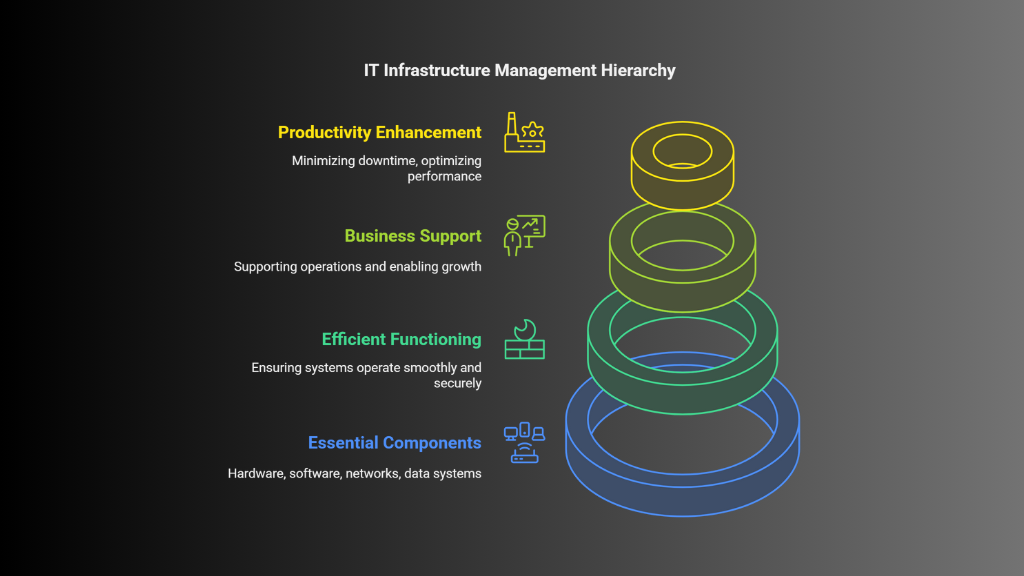
IT infrastructure management refers to the processes and tools that organizations use to oversee their technology environment. This includes everything from hardware components like servers and networking devices to software applications and data storage solutions. The goal is to ensure that all these elements work together seamlessly to support business operations. A well-managed IT infrastructure not only minimizes downtime but also enhances productivity and efficiency across the entire organization.
In essence, IT infrastructure management is about maintaining the backbone of a company’s technology resources. This involves regular IT monitoring, maintenance, and upgrades to ensure that all systems are functioning optimally. It encompasses various aspects such as network management, server management, data center management, and cloud services management. Each component plays a crucial role in ensuring that the IT environment is robust and capable of supporting the organization’s goals.
Understanding the complexities of IT infrastructure management is essential for businesses of all sizes. With the rapid evolution of technology, organizations must adapt their infrastructure to meet changing demands. This requires a clear strategy that encompasses not only the current state of IT resources but also future scalability and performance requirements. By adopting a proactive approach to IT infrastructure management, businesses can mitigate risks and capitalize on opportunities for growth and innovation.
Importance of Streamlining and Optimizing IT Infrastructure Management
A streamlined infrastructure directly affects cost and service quality. Organizations under pressure to do more with less rely on eliminating redundant tools, reducing wasted resources, and cutting response times. Getting this right frees up budget and staff time for the work that actually grows the business.
It also affects the people using the systems day to day. Fast access to information, reliable uptime, and minimal downtime shape how end users experience the technology they depend on. When performance lags, that friction shows up as lost productivity and frustrated teams.
Security and compliance benefit too. A well-organized infrastructure gives IT teams better visibility into what’s running where, which makes it far easier to enforce security protocols and meet compliance requirements consistently, rather than catching gaps after the fact.
Common Challenges in IT Infrastructure Management
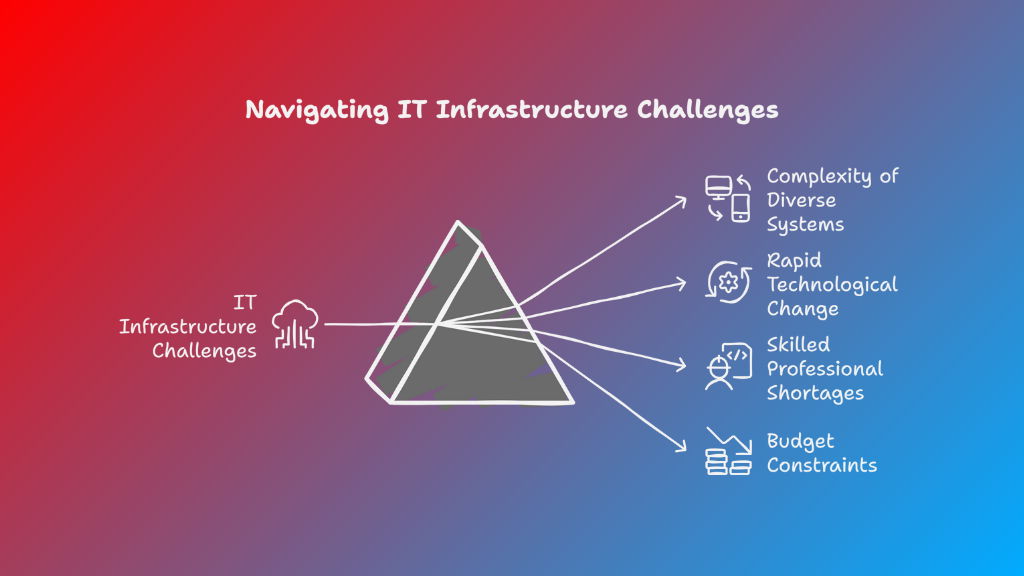
Despite the importance of effective IT infrastructure management, organizations often face several challenges that can impede their efforts. One of the most significant issues is the complexity of managing diverse technology environments. Many businesses operate with a mix of legacy systems and modern solutions, making it difficult to integrate and streamline operations. This complexity can lead to increased maintenance costs and longer response times when issues arise.
Another common challenge is the rapid pace of technological change. New technologies emerge frequently, and organizations must stay current to remain competitive. However, the constant need to adapt can strain resources and divert attention from core business operations. This challenge is exacerbated by the shortage of skilled IT professionals, making it difficult for organizations to implement and manage new technologies effectively.
Additionally, organizations often grapple with budget constraints that limit their ability to invest in necessary upgrades and tools. Many businesses find themselves in a reactive mode, addressing issues as they arise rather than taking a proactive approach to IT infrastructure management. This can lead to a cycle of inefficiency, where outdated systems and processes hinder overall performance. To overcome these challenges, organizations must adopt a strategic mindset and prioritize continuous improvement within their IT infrastructure.
Best Practices for Streamlining and Optimizing IT Infrastructure Management
To effectively streamline and optimize IT infrastructure management, organizations should adopt several best practices. First and foremost, conducting a thorough assessment of the current IT environment is essential. This includes evaluating hardware, software, and network resources to identify areas for improvement. By understanding the existing landscape, organizations can make informed decisions about where to allocate resources and which technologies to adopt.
Another best practice is to implement standardized processes and procedures across the IT infrastructure. This includes defining clear roles and responsibilities, establishing protocols for incident management, and creating documentation for system configurations. Standardization not only improves efficiency but also facilitates better collaboration among IT teams, leading to faster resolution of issues and improved service delivery.
Furthermore, organizations should prioritize regular training and development for their IT staff. With the rapid evolution of technology, keeping skills up-to-date is crucial for maximizing the benefits of new tools and systems. Investing in continuous education helps ensure that IT professionals are equipped to handle emerging challenges and can implement best practices effectively. By fostering a culture of learning, organizations can enhance their overall IT capabilities and improve infrastructure management.
Tools and Technologies for Efficient IT Infrastructure Management
The right tools and technologies are vital for efficient IT infrastructure management. Organizations can leverage various software solutions to automate processes, monitor performance, and enhance decision-making. For instance, network monitoring tools provide real-time insights into network performance, allowing IT teams to identify and address issues proactively. These tools can also help optimize bandwidth usage and reduce downtime, contributing to a more reliable IT environment.
Additionally, configuration management tools enable organizations to maintain consistency across their IT infrastructure. By automating the management of system configurations, businesses can ensure that all devices and applications are aligned with organizational standards. This not only reduces the risk of misconfigurations but also streamlines the deployment of new systems and updates.
Cloud-based solutions have also transformed IT infrastructure management. By leveraging cloud services, organizations can achieve greater scalability and flexibility, allowing them to adapt quickly to changing business needs. Cloud solutions often come with built-in security features, automatic updates, and backup capabilities, further simplifying infrastructure management. Embracing these tools and technologies is crucial for organizations looking to optimize their IT infrastructure and drive efficiency.
Implementing Automation in IT Infrastructure Management
Automation plays a pivotal role in optimizing IT infrastructure management. By automating routine tasks and processes, organizations can free up valuable time for IT personnel, allowing them to focus on more strategic initiatives. For example, automating system monitoring and alerts can help IT teams identify potential issues before they escalate, reducing downtime and improving service reliability.
Moreover, automation can enhance consistency and accuracy in IT operations. Manual processes are often prone to errors, which can lead to security vulnerabilities and compliance risks. By implementing automated workflows, organizations can standardize processes, ensuring that each task is completed in accordance with established guidelines. This not only boosts efficiency but also enhances overall security posture.
Additionally, automation facilitates faster deployment of applications and updates. Continuous integration and continuous deployment (CI/CD) practices enable organizations to release new features and fixes more frequently, ensuring that systems remain current and aligned with business goals. By embracing automation in IT infrastructure management, organizations can achieve greater agility, reduce operational costs, and improve overall performance.
Benefits of Centralized IT Infrastructure Management
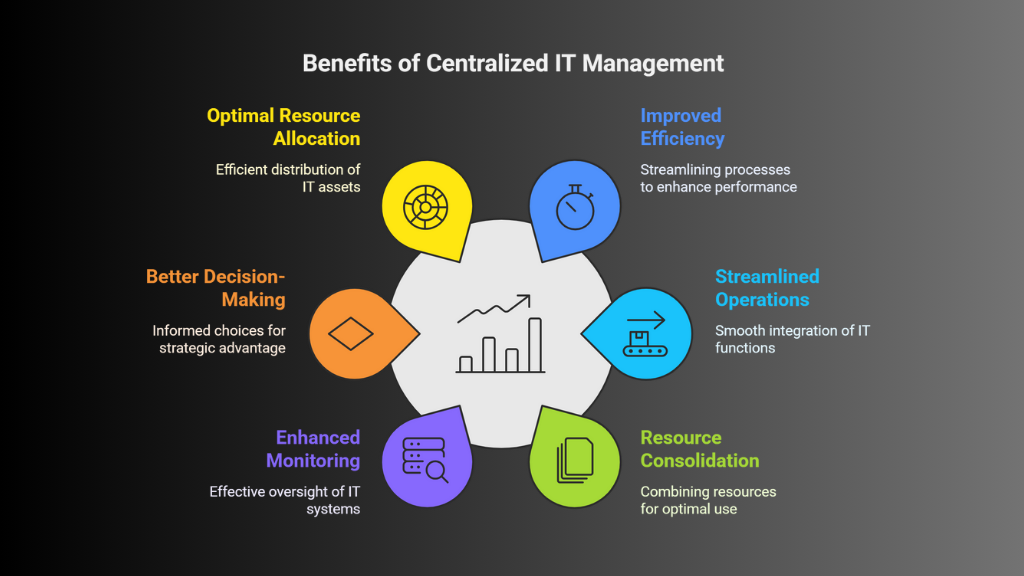
Centralized IT infrastructure management offers numerous benefits that can significantly enhance operational efficiency. One of the primary advantages is improved visibility across the entire IT environment. With a centralized approach, IT teams can monitor all systems and resources from a single dashboard, allowing for real-time user insights into performance and potential issues. This visibility enables proactive problem-solving and helps ensure that all components are aligned with organizational objectives.
Additionally, centralized management simplifies resource allocation and reduces redundancies. By consolidating IT resources, organizations can optimize their investments and eliminate unnecessary expenditures. This streamlined approach also facilitates better collaboration among IT teams, as everyone has access to the same information and tools. Improved communication and collaboration ultimately lead to faster decision-making and enhanced service delivery.
Furthermore, centralized IT infrastructure management enhances security and compliance. With all resources managed from a single point, organizations can implement uniform security policies and ensure that compliance requirements are met consistently. This centralized control minimizes the risk of vulnerabilities and helps protect sensitive data from potential breaches. Overall, adopting a centralized management approach can drive significant improvements in efficiency, security, and overall performance.
Ensuring Security and Compliance in IT Infrastructure Management
In today’s digital landscape, ensuring security and compliance is paramount for effective IT infrastructure management. Organizations are increasingly targeted by cyber threats, making it essential to implement robust security measures. This includes adopting firewalls, intrusion detection systems, and encryption protocols to safeguard sensitive data. Regular security audits and vulnerability assessments are also crucial for identifying potential weaknesses in the IT infrastructure.
Compliance with industry regulations is another critical aspect of IT infrastructure management. Organizations must adhere to various standards, such as GDPR, HIPAA, or PCI DSS, depending on their industry. Implementing a compliance management framework helps ensure that all processes and systems meet required standards. This includes maintaining proper documentation, conducting regular training for employees, and establishing protocols for incident response.
Moreover, fostering a culture of security awareness within the organization is essential. Employees are often the first line of defense against cyber threats, and educating them about best practices can significantly reduce the risk of breaches. By promoting security awareness and compliance training, organizations can create a more resilient IT environment that is better equipped to handle potential threats and regulatory challenges.
Measuring and Monitoring the Effectiveness of IT Infrastructure Management
To ensure that IT infrastructure management efforts are yielding desired results, measuring and monitoring effectiveness is essential. Key performance indicators (KPIs) should be established to assess various aspects of IT operations, such as system uptime, response times, and user satisfaction. By tracking these metrics, organizations can gain valuable insights into the performance of their IT infrastructure and identify areas for improvement.
Regular performance reviews and audits are also crucial for evaluating the effectiveness of IT management processes. This involves analyzing the data collected from network monitoring tools and comparing it against established benchmarks. By conducting these reviews, organizations can identify trends, uncover potential issues, and make data-driven decisions to enhance overall performance.
Additionally, feedback from end-users is an invaluable component of measuring effectiveness. By soliciting input from employees and customers, organizations can gain a better understanding of their IT infrastructure’s impact on daily operations. This feedback can inform future improvements and adjustments, ensuring that IT infrastructure management aligns with business goals and user needs. Through continuous measurement and monitoring, organizations can achieve optimal performance and drive ongoing improvements in their IT infrastructure management.
Conclusion: Achieving Optimal Performance and Cost-Efficiency in IT Infrastructure Management
Streamlining IT infrastructure management comes down to a few consistent habits: know what you have, standardize how you manage it, invest in the right tools, and measure whether it’s working. None of it is complicated in principle. It’s consistency that’s hard.
Automation, centralized visibility, and a real security posture all compound on each other. Teams that build these habits early spend less time firefighting and more time on work that actually grows the business.
Ready to centralize your infrastructure monitoring instead of stitching together separate tools? Splitpoint Solutions provides managed infrastructure monitoring built for enterprise teams. Talk to our team for a free consultation.